The dental industry continues to evolve, and so do the opportunities available to dental professionals. As dental practices expand their services and patients become more informed about their treatment options, there is an increasing need for professionals with specialized skills who can support both clinical and administrative aspects of patient care.
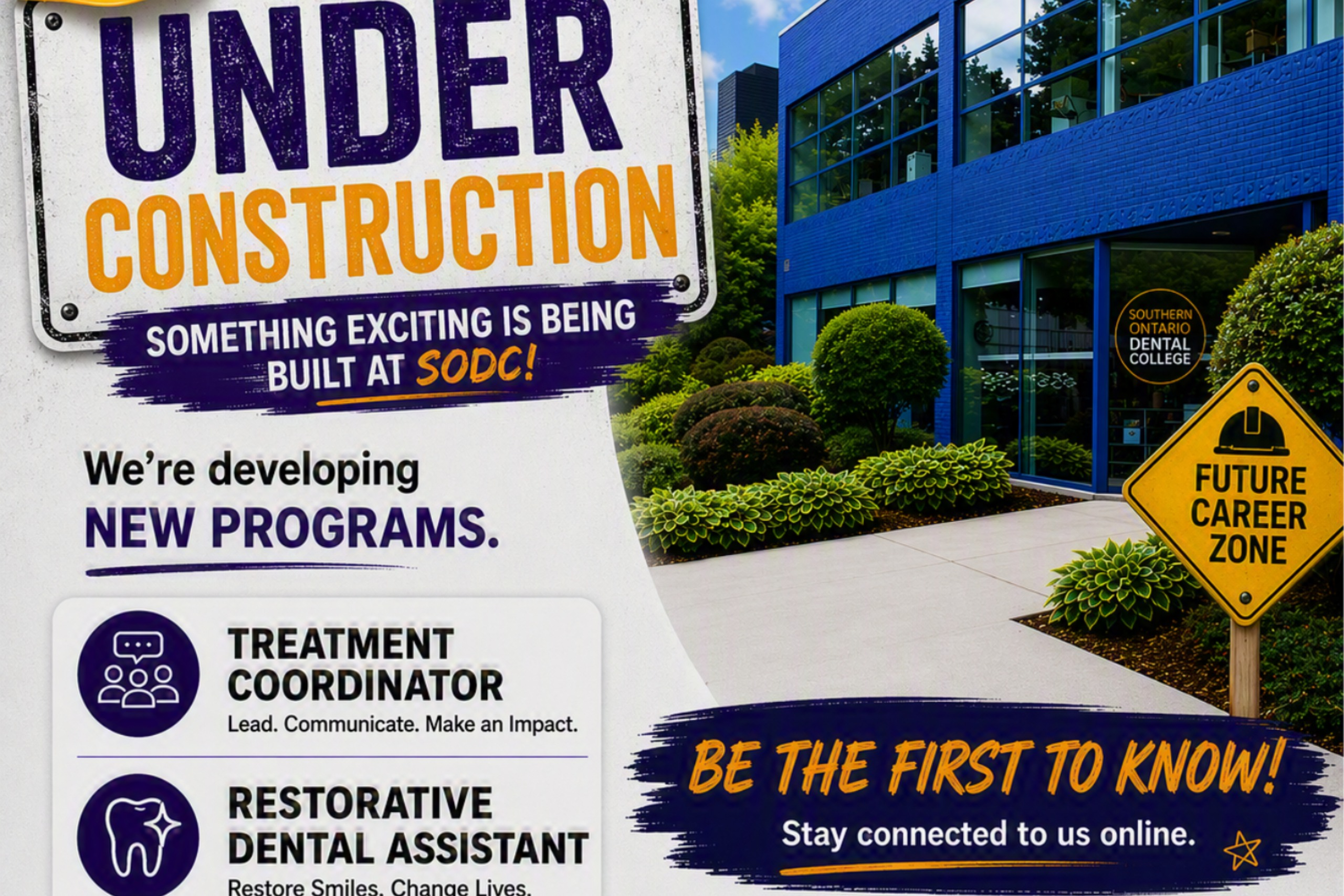
That is why our college is excited to introduce two new programs: Treatment Coordinator and Restorative Dental Assistant.
These programs are designed for individuals who want to build on their existing dental knowledge, develop specialized skills, and create new opportunities within a profession they already know and enjoy.
Whether you are currently working as a dental assistant, receptionist, treatment coordinator, or another member of a dental team, investing in an additional skill set can help you become a more versatile and valuable professional.
Why Add a New Skill to Your Dental Career?
Professional growth does not always mean starting over.
Sometimes, the best way to advance your career is to take the experience and knowledge you already have and add another layer of expertise.
Additional training can help dental professionals:
- Expand the responsibilities they can take on within a dental practice
- Develop confidence in a specialized area
- Become more versatile members of the dental team
- Explore new career opportunities
- Take on leadership or advanced responsibilities
- Better understand the patient experience from consultation through treatment
- Strengthen communication and patient education skills
- Stay current as dental practices and technology continue to evolve
Think of your current experience as a foundation. Adding a new skill allows you to build on that foundation instead of starting from the beginning.
What Does a Treatment Coordinator Do?
Treatment coordination combines communication, organization, patient education, and knowledge of dental procedures.
Typical responsibilities may include:
- Reviewing proposed treatment plans with patients
- Explaining treatment recommendations in clear, patient-friendly language
- Answering questions about procedures and next steps
- Helping patients understand their treatment options
- Coordinating appointments and treatment schedules
- Communicating with dentists and other members of the dental team
- Following up with patients regarding recommended treatment
- Helping patients navigate treatment timelines
- Discussing financial considerations and payment processes within the practice’s established policies
- Maintaining accurate patient documentation
- Supporting case presentation and treatment acceptance
- Building positive relationships with patients throughout their treatment journey
A successful Treatment Coordinator needs more than administrative skills. They need to understand dentistry well enough to communicate treatment information accurately while also recognizing that every patient has different concerns, questions, and priorities.
Why Treatment Coordination Matters
For many patients, a dental treatment plan can feel overwhelming. They may have questions about what a procedure involves, how many appointments they will need, or what the next step should be.
A Treatment Coordinator helps make that process easier to understand.
This role can be particularly rewarding for professionals who enjoy working with people, communicating, organizing information, and helping patients feel comfortable with their dental care.
What Does a Restorative Dental Assistant Do?
Depending on the practice, province, employer, and applicable regulations, responsibilities may include supporting the dental team with restorative procedures such as:
- Preparing treatment rooms for restorative appointments
- Preparing instruments, materials, and equipment
- Reviewing the planned procedure and preparing the appropriate setup
- Assisting the dentist during restorative treatment
- Passing instruments and materials during procedures
- Supporting moisture control and maintaining an organized treatment field
- Preparing restorative materials according to the dentist’s instructions and applicable protocols
- Maintaining appropriate infection prevention and control procedures
- Providing chairside support during procedures
- Helping prepare the patient before treatment
- Providing post-treatment instructions as directed by the dental professional
- Cleaning, disinfecting, and preparing the operatory between patients
- Maintaining inventory of restorative materials and supplies
- Supporting efficient clinical workflow
The exact duties of a dental assistant depend on the individual’s training, workplace responsibilities, and local regulations. Specialized education can provide professionals with additional knowledge that supports their work within those requirements.
As per the Royal College of Dental Surgeons of Ontario (RCDSO):
In addition to the intra-oral procedures listed above, a Level II Dental Assistant who has successfully completed a Supplemental Course in Restorative Procedures that meets the criteria listed in Appendix 2 may also perform any of the following 5 intra-oral procedures:
(1) taking digital/optical impressions for working models, including prepared teeth[10];
(2) taking non-alginate conventional impressions for working models, including prepared teeth[11];
(3) taking interocclusal records or bite registrations using non-rigid materials;
(4) taking facebow transfer records;
(5) fabricating single unit temporary crowns, including intra-orally, to be fitted and cemented by a dentist[12].
For the intra-oral procedures numbered (1), (2) and (5) above, the dentist giving direction to a Level II Dental Assistant to perform any of these procedures must be present in the office suite while it is being performed and ensure, prior to the patient’s discharge, that it was performed safely and competently.
For the intra-oral procedure numbered (3) and (4) above, the dentist giving direction to a Level II Dental Assistant to perform any of these procedures may permit the Level II Dental Assistant to perform it unsupervised.
Why Specialize in Restorative Dentistry?
Dental assistants already have a strong understanding of clinical environments, patient care, infection prevention, instruments, and dental procedures.
Restorative training allows them to take that existing knowledge and develop a more focused skill set.
For someone who already works in a dental practice, this can mean greater confidence when assisting with restorative procedures and a deeper understanding of the materials, techniques, and workflow involved.
It can also help professionals demonstrate their interest in continued learning and specialized clinical development.