Academic Requirements
- Be at least 18 years of age
-
Applicants educated in Ontario must provide an official Ontario Secondary School Diploma and transcript successfully completing the following courses:
- Grade 11 or 12 English (C or U) – minimum 70%
- Grade 11 or 12 Math (C or U) – minimum 70%
- Grade 11 or 12 Biology (C or U) – minimum 70%
- Grade 11 or 12 Chemistry (C or U) – minimum 70%
Note: Equivalent (EQV) will not be accepted for the courses listed above, final grade is required
-
Applicants educated in Canada but outside Ontario, must have a Secondary School Diploma equivalent to the Ontario Secondary School Diploma including the following:
- Grade 11 or 12 English – minimum 70%
- Grade 11 or 12 Math – minimum 70%
- Grade 11 or 12 Biology – minimum 70%
- Grade 11 or 12 Chemistry – minimum 70%
Applicants may also submit a transcript from a 1-year Post Secondary program (such as Dental Assistant, Pre Health, Dental Administration, etc.) along with their High School Transcript.
Note: A 1-year program alone does not meet the admissions requirements. Applicants must also meet the High School (OSSD) requirements listed above.
- Applicants educated in Canada must provide an official college or university transcript confirming successful completion of a program that is at least 2 continuous academic years in length. Transcripts for programs that are still in progress will not be accepted
-
Applicants educated outside Canada must have the following educational requirements (Assessment Report + English Proficiency Test)
-
An assessment report for the highest level of education from the International Credential Assessment Service (ICAS) or World Education Services (WES) of all qualifications obtained with a certified copy of the individual course descriptions for each post-secondary courses taken
High School: The assessment report must show that the student has education equivalent to an Ontario Secondary School Diploma as well as;
- Grade 11 or 12 English – minimum 70%
- Grade 11 or 12 Math – minimum 70%
- Grade 11 or 12 Biology – minimum 70%
- Grade 11 or 12 Chemistry – minimum 70%
OR
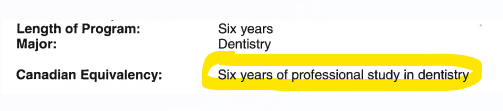
Post Secondary: The assessment report must show the diploma/degree/masters/etc. being equivalent to minimum of 2-years in the Canadian system.
Example from WES report:
-
English Proficiency Test:
- The language of instruction is English, applicants whose first language is not English must either complete at least a combination of two years of full-time academic study in a country where English is the first language (Canada), or provide evidence of having achieved an appropriate standard in a recognized test of English proficiency such as International English Language Testing System (IELTS) or Duolingo.
-
An assessment report for the highest level of education from the International Credential Assessment Service (ICAS) or World Education Services (WES) of all qualifications obtained with a certified copy of the individual course descriptions for each post-secondary courses taken
- Provide two professional recommendation letters
- Attend Pre Admissions Testing Day that consists of: interview, online entrance exam, reading and writing assessments
Mature Students (21+) with no High School Diploma
If you are age 21 or older as of the first day of classes, and do not have an Ontario Secondary School Diploma (OSSD) or equivalent, you may be considered for admission as a mature student. You must meet all specific admission requirements (courses, Pre-Admissions testing, etc.) for the program to which you are applying.
Mature students applying to the Dental Hygiene Program must meet the same high school prerequisite requirements, even if they did not complete secondary school.
Applicants must have completed Grade 11 or 12 (c or u) Math, English, Chemistry, and Biology, with a final grade of 70% or higher in each course.
Note: Enroll in an Adult Learning Centre or local high school to complete any missing requirement.
All official transcripts and diplomas must be sent to the college in a sealed and stamped envelope directly from your High School and/or Post Secondary School. An electronic version can be accepted if sent directly from the school.
Outside of Canada
How to Apply
Next Intake:
Window To Apply:
Step 1. Fill out the online application form: click here. A member of the Admissions team will send you communication once your application is received and reviewed.
Step 2. Each applicant will receive access information for their online profile. Instructions to upload your recommendation letter and English test (if required) will be provided by email from an admissions member.
Step 3. All supporting transcripts must be sent to the Admissions Team directly from the school by email or by physical mail.
All original assessment reports (WES or ICAS) must be physically mailed to the Admissions Team.
Mailing Address:
Southern Ontario Dental College
Administrative Building
253 Wilson Street East
Ancaster, ON L9G 2B8
Please Note:
Official transcripts can be emailed directly to: admissions@sodentalcollege.com from the following for example:
- Guidance Department (High School)
- Registrar Department (Post Secondary)
- MyCreds (Post Secondary)
- TVO ILC (High School)
Step 4. Once all documents have been received and assessed, the Admissions Officer will book the Pre Admissions Test with each applicant and charge the application fee.
Application fee: $250
Pre-Admissions Testing
Applicants who meet our admissions requirements will be invited to complete Pre-Admissions testing.
Pre-Admissions Testing:
- Online Entrance Exam
- Interview
- Reading & Writing Assessments
Online Entrance Exam
Applicants are required to write an entrance exam that is designed to assess their general knowledge and problem-solving aptitude.
This exam will cover some of these skill areas:
- English Vocabulary
- Mathematics
- Reasoning
Note: There are no study guides for this exam. The online entrance exam consists of 50-questions which are to be completed within 12 minutes.
Interview
Applicants will be required to complete an interview with our admissions team.
Reading & Writing Assessments
Applicants will be required to complete timed comprehensive English exams.
Fees
The Dental Hygiene Program is 82-weeks in duration.
Application fee – $250 (will be charged upon applying).
Contact programinfo@sodentalcollege.com for tuition fees.
Tuition for this program includes:
- All required textbooks
- A complete set of periodontal instruments
- 1 dental model (typodont)
- 1 pair of scrubs
- 1 lab coat
- 1 set of safety glasses
- In-class resource materials (handouts, etc.)
Financial assistance may be available for those who qualify.
The SODC Dental Hygiene program is an innovative hybrid curriculum. Our ultimate goal is to help SODC students become skilled Dental Hygiene Professionals who are committed to lifelong learning. It is a quality Dental Hygiene program known for its modern, well-equipped facilities, and respected for its 99% graduation rate.
Dental Hygiene Program Specifics
- Program commences each February and September
- 82-weeks in duration
- Consists of 4 consecutive terms
Please be advised that this program is delivered through a hybrid learning model, consisting of:
- In-person instruction
- Online synchronous instruction
- Online asynchronous instruction
Terms 1 through 4 consist of a combination of online theory courses and in-person clinical and practical sessions. Students are required to participate in all scheduled components of the program to successfully complete their studies.
Total Theory Hours-449
Total Clinical Hours-144
Total Hours-593
Total Theory Hours-369
Total Clinical Hours-267
Total Hours-636
Total Theory Hours-252
Total Clinical Hours-240
Total Hours-492
Total Theory Hours-279
Total Clinical Hours-210
Total Hours-489
HOURS ARE SUBJECT TO CHANGE – EVENINGS AND WEEKENDS, INCLUDING SATURDAYS AND SUNDAYS MAY BE ADDED TO THE SCHEDULE.
This program does not accept Prior Learning Assessment and Recognition (PLAR), nor does it permit the transfer of credits from other institutions or programs. To be eligible to receive our diploma, students are required to complete the program in its entirety. No exemptions or credit transfers will be granted.
YEAR 1
| Term 1 | Term 2 |
|---|---|
| BIOSC 101: Psychology (30 hours)
Read More
This course will introduce the dental hygiene student to a number of theories about human behaviour, needs and communication with a focus on how this knowledge can be applied to dental hygiene practice.
|
201: Foundations of Ethics (35 hours)
Read More
This course lays the foundation for the dental hygiene student to understand and apply the implications and responsibilities of becoming a regulated health care professional, by exploring concepts of ethics and ethical decision making. Key concepts and principles are examined in relation to the code of ethics and are applied by using the ethical decision-making model.
|
| BEHSC 102: Sociology (30 hours)
Read More
This course will assist the dental hygiene student in understanding foundational concepts in Sociology. It will prepare them to consider how sociology impacts health care and how health care impacts society.
|
DH 202: Medical Emergencies (33 hours)
Read More
This course will assist the dental hygiene student to acquire the knowledge and skills to initiate behaviour change and support individuals and communities in the behaviour change process. Evidence-based literature in education, health psychology, prevention, health promotion and oral epidemiology will be applied to oral health issues. Students will gain experience applying behaviour change theories to support the reduction of health risk behaviours.
|
| BEHSC 103: Communications (40 hours)
Read More
This course will provide the dental hygiene student the opportunity to develop, support, and expand on professional communication skills. The review of structure, tone and mechanics will enhance the clarity and quality of the student’s communication. The student will develop effective writing skills, and verbal and non-verbal communication skills using common language and dental terminology. The student will also explore applications of technology as forms of communication, including emerging technology tools such as social media in the practice of dental hygiene.
|
BIOSC 203: Human Pathophysiology (45 hours)
Read More
This course will provide the dental hygiene student with the scientific basis for understanding the human organism as a functioning unit. Emphasis will be placed on disorders of the body systems that may be found on a medical history form, and the effect of these disorders on the oral cavity and oral health will be discussed.
|
| BIOSC 104: Anatomy & Physiology (51 hours)
Read More
This course will provide the dental hygiene student with the scientific basis for understanding the human organism as a functioning unit. Emphasis will be placed on the relationship between systems, structures and the functioning of the human body.
|
BIOSC 204: Pharmacology (63 hours)
Read More
This course will assist the dental hygiene student in gaining an understanding of the principles of pharmacology with special emphasis being given to therapeutic agents that have implications for oral health care.
|
| BIOSC 105: Microbiology & Immunology (34 hours)
Read More
This course will assist the dental hygiene student in the acquisition of knowledge regarding the growth, metabolism and genetics of microbes, their relationship to the host, the immunological response, disease, and oral complications.
|
OHS 205: Foundations of Periodontology (63 hours)
Read More
This course is designed to assist the dental hygiene student to acquire foundational knowledge regarding principles of periodontology ranging from microscopic details to clinical signs and symptoms using evidence-based decision making.
|
| OHS 106: Orofacial Anatomy (60 hours)
Read More
This course will examine the anatomy and physiology of the head and neck region. The dental hygiene student will explore the structure and function of primary and secondary dentition including occlusion, and the relationship of the dentition to the surrounding structures and systems including the muscles, salivary glands, lymphatic system, nervous and circulatory system.
|
OHS 206: Oral Pathology (47 hours)
Read More
This course is designed to assist the dental hygiene student to gain foundational knowledge regarding principles of pathology ranging from microscopic details to clinical signs and symptoms. Attention will be directed to the oral conditions associated with neoplasms and developmental, acquired, genetic, systemic or infectious disease.
|
| OHS 107: Oral Histology & Embryology (40 hours)
Read More
This course is designed to provide dental hygiene students with foundational knowledge regarding the embryonic and histological composition of the structures of the head and neck region.
|
OHS 207: Foundations of Radiology (48 hours)
Read More
The dental hygiene student will investigate the fundamental scientific principles upon which oral radiography is based. They will examine exposure techniques, processing, mounting, interpretation of radiographs and develop the knowledge to produce diagnostically valuable radiographs while minimizing client and operator exposure.
|
| 108: Preventive (45 hours)
Read More
This course introduces the dental hygiene student to the concepts of preventing oral disease through therapeutic and educational interventions. It also provides the dental hygiene student with the foundation to provide appropriate oral disease prevention information in a variety of settings with the focus on individualized programs presented within the framework of the dental hygiene process of care.
|
OHS 208: Principles of Dental Materials (35 hours)
Read More
This course will provide the dental hygiene student with the foundational knowledge related to dental biomaterials with an emphasis on their composition, properties and application. It will include an analysis of the effects of materials on the oral environment, and the effectiveness of specific materials on the prevention and treatment of oral disease.
|
| OHS 109: Oral Microbiology (24 hours)
Read More
This course will introduce the dental hygiene student to microbes and assist the learner gain knowledge of the complex relationship between microbes and their host and the role of microbes in health and disease.
|
OHS 209: Radiology Practical (35 hours)
Read More
This course is designed to provide the dental hygiene student with the foundational knowledge to meet the requirements of the Healing Arts Radiation Protection Act (H.A.R.P.). Learners will develop the ability to produce diagnostically valuable radiographs while minimizing client and operator exposure.
|
| DH 110: Process of Care (30 hours)
Read More
The Dental Hygiene Process of Care is the basis for dental hygiene practice. This course will serve as an introduction to the history, components, application and implications of using the Dental Hygiene Process of Care for client care.
|
OHS 210: Dental Materials Practical (32 hours)
Read More
The dental hygiene student will have an opportunity to develop essential skills based on their knowledge of dental biomaterials theories in a laboratory and clinical environment.
|
| DH 111: Foundations of Dental Hygiene (65 hours)
Read More
This course is designed to provide the dental hygiene student with the conceptual framework for dental hygiene practice. Students will be introduced to the dental hygiene process of care ADPIE (Assessment Diagnosis Planning Implementation Evaluation), clinical infection control procedures, instrumentation, record keeping and practice standards for a clinical setting.
|
DH 211: Clinical Preparation 2 (200 hours)
Read More
This course will provide learners with opportunities to practice, expand upon, and refine their abilities in the dental hygiene process of care with a focus on all aspects of ADPIE.
|
| DH 112: Clinical Preparation 1 (144 hours)
Read More
This course will introduce the dental hygiene student to practical components of the Dental Hygiene Process of Care such as vitals, medical history, infection control, reprocessing and instrumentation that support Dental Hygiene practice.
|
YEAR 2
| Term 3 | Term 4 |
|---|---|
| BEHSC 301: Diverse Populations (30 hours)
Read More
This course is designed to familiarize the dental hygiene student with conditions that would contribute to a client being classified as having diverse needs, and how these diverse needs affect all aspects the dental hygiene process of care.
|
BEHSC 401: Business and Practice Management (45 hours)
Read More
This course will provide the dental hygiene student with business and practice management skills. Emphasis will be placed on the multi-disciplinary roles of the dental hygienist within a dental or dental hygiene-oriented office setting such as business plans and career management strategies.
|
| BEHSC 302: Research & Statistics (47 hours)
Read More
Knowledge of research and statistics is an essential skill to inform evidence based dental hygiene practice. The sources and characteristics of evidence and the basics of statistical analysis will be examined to assist the students in all levels of education and practice.
|
OHS 402: Advanced Periodontology (35 hours)
Read More
This course is designed to assist the dental hygiene student to gain advanced knowledge and skills regarding principles of surgical and non-surgical interventions of the periodontal client. Attention will be directed to the evidence-based approach to surgical and non-surgical periodontal therapy, emergencies and advances in client management.
|
| BEHSC 303: Community Program Planning (45 hours)
Read More
This course provides the dental hygiene student with the foundational knowledge that will assist them in the promotion of oral health and prevent oral diseases through community-based programs. It provides the dental hygiene student with an understanding of the health care system, and the social, political and economic forces influencing the system.
|
DH 403: Professional Jurisprudence (30 hours)
Read More
This course focuses on the entry to practice for newly graduated dental hygienists. The course will explore the opportunities for employment which reflect the diverse skills of dental hygienists as well as the concrete issues of becoming registered.
|
| BEHSC 304: Interprofessionalism (20 hours)
Read More
This course will provide the opportunity for the dental hygiene student to examine the principles behind collaborative health care, and to interact collaboratively with regulated health care practitioners and health care providers in diverse health care settings.
|
DH 404: Health Informatics & Emerging Trends (20 hours)
Read More
This course will provide the dental hygiene student the opportunity to gain foundational knowledge regarding the effects of emerging technology on healthcare. The dental hygiene student will consider emergent technology in relation to the dental hygiene process of care, focusing on privacy and health privacy regulations.
|
| BIOSC 305: Nutrition (30 hours)
Read More
This course will provide dental hygiene students with foundational knowledge of nutrition as it applies to dental hygiene, including nutrients for growth, development of oral structures, diet and its’ implications for dental caries, caries risk management by assessment (CAMBRA), nutrition and periodontal diseases, and dietary counselling. The course also introduces the dental hygiene student to the nutritional recommendations of Canada’s Food Guide, nutritional implications of common illnesses and chronic conditions, as well as nutritional misinformation and food faddism.
|
DH 405: Orthodontics (35 hours)
Read More
This course will provide the dental hygiene student with the fundamentals in the study of orthodontics. Dental hygiene students will receive both didactic instruction and be given the opportunity to experience the hands-on practical application of skills.
|
| OHS 306: Dental Specialties (30 hours)
Read More
This course will provide the dental hygiene student with basic information about each of the dental specialties (excluding periodontics and orthodontics), and dental hygiene specialities. The dental hygiene student will gain foundational knowledge regarding the referral process, need for treatment, basic techniques and materials required for each speciality and clinical and radiographic processes with special focus on the impact on the dental hygiene process of care.
|
DH 406: Community Practical (30 hours)
Read More
This course will allow the dental hygiene student to apply their knowledge of theoretical underpinnings of community practice in a live project. This course will provide learners the opportunity to integrate the ADPIE process into community practice.
|
| DH 307: Pain & Anxiety Management (20 hours)
Read More
This course will provide the dental hygiene student with the scientific basis for understanding the management of pain and anxiety in the dental hygiene setting.
|
DH 407: Interprofessional Practice (30 hours)
Read More
Dental hygiene students will work with students from other programs and/or practitioners from different health professions. They will apply the theoretical learning/teaching from the previous term’s BehSc 304 Interprofessional Education to a real-world application in order to promote health and education for students, practitioners and clients and bring about praxis.
|
| BEHSC 308: Educational Theories & Health Promotion (30 hours)
Read More
This course will provide the dental hygiene student with the necessary knowledge required to prevent and manage a medical emergency in a dental setting.
|
BEHSC 408: Advocacy, Policy & Politics (23 hours)
Read More
This course will introduce the dental hygiene student to various components of health and dental health care delivery in Canada. It also examines the human resources, legal and ethical aspects of health care and dental health care in Canada.
|
| DH 309: Clinical Client 1 (240 hours)
Read More
This course will provide the dental hygiene student with opportunities to expand and refine their abilities in the dental hygiene process of care in the clinical setting. The foundational knowledge gained in supporting courses will be integrated into the care provided in clinical practice. This course will also provide opportunities for rotations into dental practices.
|
DH 409: Evidence Based Practice (30 hours)
Read More
The evidence-based practice course will provide the dental hygiene student with the opportunity to learn the Evidence Based Decision Making Process. The dental hygiene student will use specific skills for interpreting scientific evidence in conjunction with their experience and judgment, the client’s preferences and values along with the specific clinical circumstances to make sound practice decisions.
|
| DH 410: Clinical Client Care 2 (210 hours)
Read More
This course will provide the dental hygiene student with continued opportunities to integrate the ADPIE process into clinical dental hygiene services using the best available evidence upon which to base decisions and actions.
|
Graduates of non-accredited programs must contact the regulator of the province they plan to work in to find out the specific provincial requirements, which in most case includes:
1. Write and pass the National Dental Hygiene Certification Examination (NDHCE)
2. Write and pass the NDHCE and the Canadian Performance Examination in Dental Hygiene (CPEDH).
The Dental Hygiene program at Southern Ontario Dental College is accredited.
Dental Hygienists in Ontario also enjoy the flexibility of part-time employment and the opportunities of working in a variety of professional settings.
Hamilton Street Railway: www.city.hamilton.on.ca/Living-Here/Transit/default.asp
City of Hamilton: www.city.hamilton.on.ca
Are you interested in applying for this program?
Contact us today.
Or Call us toll-free at 1-866-979-6334